
Should You Remove a Tree Stump or Leave It in the Ground?
The Pros, Cons, and Best Option for Your Property
After a tree is removed, many homeowners wonder whether the remaining stump should stay or be removed. While leaving a stump may seem harmless, it can create safety, landscaping, and pest issues over time. This guide explains the advantages and disadvantages of both options so you can make the best decision for your property in Maryville, Tennessee.
Everything You Should Know Before Deciding
Why Tree Stumps Are Often Left Behind
Once a tree has been removed, the remaining stump can appear relatively harmless. Since the expensive part of the project—the tree removal—is already complete, many homeowners choose to leave the stump in place, especially if it’s located in an area that doesn’t receive much foot traffic.
In some situations, leaving the stump may be perfectly acceptable for a short period of time. It doesn’t immediately create a safety issue in every yard, and homeowners may choose to delay stump removal until it better fits their budget or landscaping plans.
However, a tree stump rarely improves with age. Over the months and years, it slowly begins to decay, creating new concerns that many homeowners don’t initially consider. Understanding those long-term effects is the key to deciding whether removal makes sense.
The Problems a Tree Stump Can Cause
One of the biggest disadvantages of leaving a stump behind is that it becomes an obstacle. Whether you’re mowing the lawn, walking across the yard, or planning future landscaping projects, the stump remains in the way.
Tree stumps also create tripping hazards, particularly for children, guests, and anyone unfamiliar with your property. Even a low stump hidden by grass can cause someone to stumble.
As the stump begins to rot, insects are naturally attracted to the decaying wood. Termites, ants, beetles, and other wood-boring insects often use old stumps as nesting sites. While they don’t always spread to nearby structures, eliminating the source reduces the risk.
Rotting wood also encourages fungal growth. Although mushrooms growing around a stump may seem harmless, they indicate ongoing decay beneath the surface.
Can a Tree Stump Continue Growing?
Many homeowners are surprised to learn that some tree stumps continue producing new shoots after the tree has been cut down.
Certain tree species have extensive root systems that remain alive for months—or even years—after removal. As long as the roots continue receiving stored nutrients, small sprouts may emerge around the stump or nearby roots.
These shoots rarely grow into healthy replacement trees, but they can become an ongoing maintenance issue. Repeated trimming often becomes necessary, making the stump more frustrating over time.
Eventually the root system dies, but depending on the species and growing conditions, this process can take several years.
How Tree Stumps Affect Your Landscaping
If you have plans to improve your yard, install a patio, expand a garden, or plant new grass, an old stump quickly becomes a problem.
The remaining root system makes digging difficult and limits how the surrounding area can be used. Even decorative landscaping can become awkward when forced to work around a large stump.
Homeowners preparing to sell their property also consider curb appeal. A freshly maintained yard generally creates a stronger first impression than one with aging stumps scattered throughout the landscape.
Removing the stump allows the area to be leveled, reseeded, landscaped, or repurposed without future obstacles.
When Leaving a Tree Stump May Be Acceptable
Despite the disadvantages, there are situations where leaving a stump may be perfectly reasonable.
If the stump sits far from structures, sidewalks, play areas, or landscaping plans, it may not create immediate problems. Some homeowners intentionally incorporate old stumps into rustic landscaping or wildlife habitats.
Large wooded properties also present different priorities than suburban yards. A stump located deep within a wooded area may never interfere with daily activities.
Ultimately, the decision depends on the stump’s location, condition, future landscaping goals, and your long-term plans for the property.
Why Many Homeowners Choose Stump Grinding
For most residential properties, stump grinding provides an effective long-term solution.
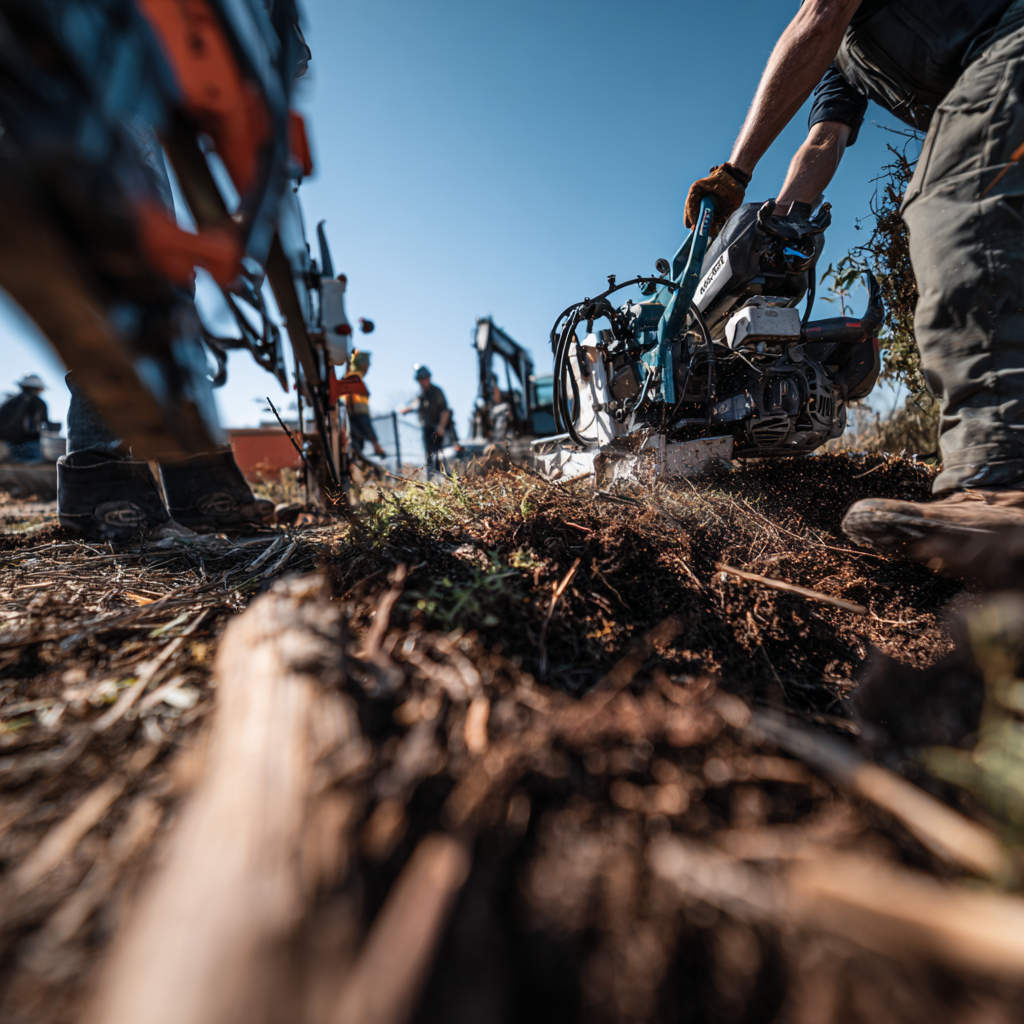
Instead of digging out the entire root system, stump grinding reduces the stump below ground level, allowing the area to be covered with soil, mulch, or grass. This restores usable yard space while eliminating the visible stump.
Grinding also removes many of the concerns associated with decaying wood, trip hazards, and recurring sprouts. It’s often faster and less disruptive than complete stump excavation.
If you’re unsure whether stump grinding is the right option for your property, we can connect you with experienced local professionals who can evaluate the stump and recommend the best solution based on its size, location, and condition.
Making the Right Decision for Your Property
Every property is different. While some homeowners can safely leave a stump for years without issue, others benefit from removing it immediately.
Consider how you use your yard, whether future landscaping projects are planned, and whether the stump creates safety or maintenance concerns. Thinking beyond today’s appearance often helps homeowners make the best long-term decision.
If you’re uncertain, speaking with an experienced local professional can provide valuable guidance. We help homeowners throughout Maryville connect with trusted tree service professionals who can evaluate their property and recommend the most practical option based on their specific needs.
Updated: July, 2026
Key Takeaways
Related Resources
Frequently Asked Questions
Find answers to some of the most common questions homeowners have about tree stumps and stump removal.
Yes, in some situations. A stump located away from structures and walkways may not cause immediate problems. However, many homeowners eventually remove stumps because they become obstacles, attract insects, or interfere with landscaping projects.
Yes, but the process is very slow. Depending on the tree species, climate, and size of the stump, natural decomposition can take many years or even decades. During that time, the stump may attract insects, fungi, and unwanted plant growth.
Most root systems gradually die after the tree is removed, but some species continue producing shoots from the remaining roots or stump for several years. An experienced local professional can determine whether additional treatment or stump grinding is recommended.
No. Stump grinding removes the visible stump below ground level while leaving most of the deeper roots to naturally decompose over time. This is sufficient for most residential properties and allows the area to be restored with grass or landscaping.
It depends on the size of the stump and remaining root system. In many cases, planting a new tree directly over the old stump isn’t recommended. Local professionals can suggest the best planting location or advise whether additional stump removal is needed.
While termites don’t typically invade healthy trees, decaying stumps can attract termites and other wood-boring insects looking for a food source. Removing old stumps may help reduce the likelihood of unwanted pests establishing themselves in your yard.
Need Help Deciding Whether to Remove Your Tree Stump?
If you’re unsure whether leaving a stump is the right choice or you’re ready to reclaim your yard, we’re here to help. Request a free estimate today and we’ll connect you with experienced local tree service professionals who can evaluate your property, answer your questions, and recommend the best solution for your needs.
Call now or get your FREE estimate today!
✓ Free Estimates ✓ Fast Response ✓ Serving Maryville & Surrounding Areas